
Commuting accident claims
Accidents on your way to or from work can also be covered by workers' comp.
We check whether you were commuting at the time, which route you took, and your commuting hours. We file workers' comp claims for accidents that happen while commuting by personal vehicle, public transit, or on foot.
What is a commuting accident?
It generally means an accident that happens while you're traveling, for work purposes, between home and work or from one workplace to another, using a usual route and method. A "usual route" means a reasonable route you could take to commute. It doesn't have to be the shortest one. Accidents in transportation provided by the employer are judged under separate requirements.
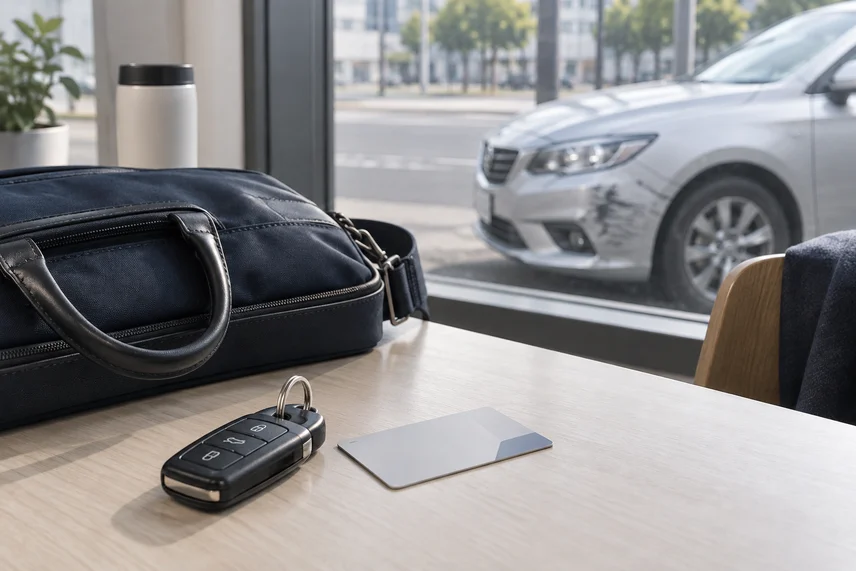
Requirements for commuting accidents
Your route and any stops along the way affect whether your claim is approved.
Travel for commuting
We check your start and end times, your work schedule, and where you left from and were heading. Night and shift work are judged by your actual working hours.
Usual route and method
We check how you traveled (car, public transit, on foot, bike, and so on) and the route you actually took. We also explain why you chose that route, such as traffic or transfers.
Personal errands along the way
If you left your route or stopped, we check why, how long it took, and where the accident happened. The outcome depends on whether a statutory exception applies.
Exceptions for detours and stops
If you stopped somewhere along the way, tell us why and where the accident happened.
If you leave your route or stop for a personal errand, accidents during the stop and the rest of the trip are generally excluded. An exception may apply if the stop counts as a statutory everyday activity.
Buying daily necessities
What you bought · where · your route · how long it took
Drop-off, pickup, and care arrangements
Child, person with a disability, or other dependent · why you dropped them off · actual route
Your own medical visit or caring for family
Need for treatment or to care for a family member receiving medical care · details of the trip
Other statutory exceptions
Requirements for job skills training, voting, and similar activities
Even if a statutory exception applies, whether your claim is approved depends on whether you were still running the errand or had finished it and resumed your commute.
Auto insurance and workers' comp offsets
Compensation from auto insurance may be offset against your workers' comp benefits.
You can't be paid twice for the same loss. We check how much of the medical costs, lost income, and other payments you've already received from auto insurance will be offset against workers' comp benefits. Before you settle, review what's covered and what the settlement includes. If you've already settled, please have your settlement agreement and insurance payment records ready.
Sobaek's practice areas
We review your route and how the accident happened, and we file your commuting accident claim.
- STEP 01

Review your route and the accident
We confirm the purpose and route of your trip using your work schedule, clock-in and clock-out records, map and location history, transit card and payment records, dashcam footage, and more.
- STEP 02

Filing and the investigation
We prepare and submit your claim. If KCOMWEL, asks whether you left your route or stopped, we submit records showing your actual route and purpose.
- STEP 03

Offsets with other insurance and appealing a denial
We check how much of what you received from other insurance will be offset against workers' comp benefits. If your claim is denied, we review whether your actual route, the accident, and the exclusions were assessed correctly, and file a request for review or reconsideration.
Frequently asked questions
Find answers to your questions before a consultation.
Is it not covered if I didn't take my usual route or the shortest one?
Not necessarily. We check whether you chose the route for a reasonable reason, such as traffic, road conditions, or transfers. That's different from taking a detour for a personal errand.
What if I got hurt on my way to work after dropping my child off at daycare?
We can check whether a statutory exception applies. We look closely at whether the trip was to take your child to daycare, where along the drop-off the accident happened, and what your route and timing to work were afterward.
What if I get hurt after stopping for groceries or a doctor's visit on the way home?
It depends on whether the purchase or visit was a daily necessity, and whether you were still on the errand or had resumed your commute. We need to look at why you stopped, your receipts, and your route and timing.
Is a fall on my apartment stairs or in the parking garage a commuting accident?
We check whether the location was a private part of your home or a shared passageway, and when your commute actually began or ended. Getting hurt close to home doesn't by itself mean the claim will or won't be approved.
What if I got hurt on my way home after dinner or drinks with friends after work?
A personal gathering may count as interrupting your commute, and an accident on the way home afterward may also be excluded. We need to check the purpose of the gathering, any work-relatedness, how long you stopped, and your route.
Can I file if I caused the car accident, for example, by running a red light?
Your share of fault alone doesn't decide workers' comp. But the exclusion for accidents caused by criminal conduct may apply, so the causal link between the violation and the accident has to be reviewed. Please don't hide specific facts like drunk driving or driving without a license.
I work at more than one place. What if I got hurt traveling between jobs?
We check whether you were traveling from one workplace to another for work purposes. We need each workplace's hours, the purpose and route of the trip, and how Industrial Accident Compensation Insurance applies.
I'm being treated through auto insurance. Can I file for workers' comp now?
Yes, you can get advice on a workers' comp claim even while auto insurance is covering your treatment. Medical costs, lost income, and other payments you've already received may be offset against workers' comp benefits, so please tell us what the insurer has paid and whether you've settled.
Request a consultation on a workers' comp or labor case
Talk to us about a commuting accident.
Tell us your commuting route and the purpose of your trip at the time of the accident. We'll advise you based on the accident records and medical records you have.
You can also email us directly
For corporate advisory work, new cases, or meeting requests,
email us at the address below.