
Workplace accidents
Hurt on the job? Let us handle your workers' comp claim and benefits.
We look into how you were hurt, whether on site, on a business trip, or while getting ready for work. We file your workers' comp claim and explain the link between the accident and your work during KCOMWEL's investigation. If your claim is denied, we file a request for review or reconsideration for you.
What is a workplace accident?
It generally means an accident that happens while you're doing your job or doing the preparation or cleanup your job requires. Accidents while using facilities or during business trips and events can also qualify for workers' comp, depending on how they happened. You need to prove how the accident happened: when, where, and what you were doing when you got hurt. What you need to prove is different from an occupational disease caused by repetitive work or long-term exposure to hazards.
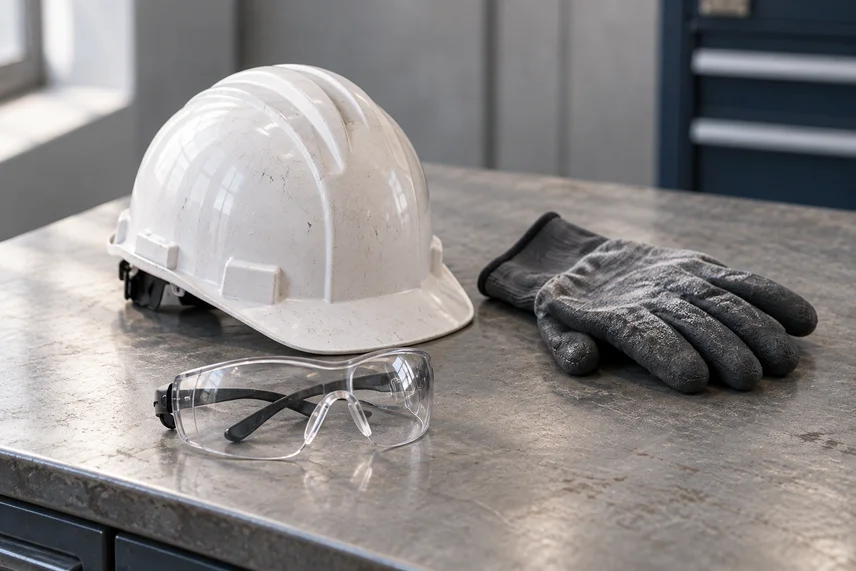
Accident types
Workplace accidents we handle
Falls and slips
Falls from height, and slips or falls on stairs or floors
Caught-in, amputation, and cut injuries
Getting a body part caught in equipment or tools, or being injured by a sharp object
Struck-by, crushing, and collision injuries
Accidents caused by falling objects, collapsed loads, or moving equipment or objects
Traffic accidents
Accidents while driving, delivering, or traveling for work
Electric shock, fire, explosion, and burns
Accidents while handling electrical equipment, sparks, hot materials, and the like
Suffocation and drowning
Accidents during confined-space work or work on or under water
Handling heavy objects
Sudden injuries to the back, shoulder, or elsewhere while lifting or moving objects
Assaults and animal attacks
Injuries from a work-related assault or an animal attack
Right after an accident
Get treated, and secure the records that explain the accident.
Explain what happened when you get treated
Tell the doctor exactly what you were doing and where you were hurt. If you suspect nerve or ligament damage beyond a fracture, describe your symptoms to your doctor and get examined.
Secure video, photos, and witnesses
CCTV · dashcam · site photos · work-order messages · witness contact info Video may only be kept for a short time, so it's best to get it quickly.
Compare with the company's report
We check whether the accident report, police investigation, and 119 (emergency services) and ER records match what actually happened. If something was recorded incorrectly, we explain why and what really happened.
Situations outside your regular tasks
An accident during a break or business trip can also be covered if it's connected to your work.
Not every accident at the workplace is covered by workers' comp. If you were hurt while running a personal errand or at a separate gathering after a company event, we need to check whether what you were doing was connected to your work.
Getting ready for or wrapping up work
Whether it was something your job required, such as changing into work clothes, checking equipment, or cleaning up
Breaks, meals, and facility use
Whether there was a work-related need, whether it was within the company's control, and whether the facility was defective
Business trips, training, company dinners, and workshops
Whether the company ordered, hosted, or managed it, how you came to take part, and what you were doing at the time of the accident
Rescue and emergency response
How helping someone or preventing a hazard related to your work
Sobaek's practice areas
From reviewing how the accident happened to filing your claim and requesting benefits, we handle it.
- STEP 01
Review the accident and diagnosis
We hear what task you were doing and on whose instructions, what the site was like, and where you were hurt, then tell you what records you need to file.
- STEP 02
Filing and KCOMWEL's investigation
We file your medical care benefits claim and explain to KCOMWEL during its investigation why the accident is work-related. If the company's statement doesn't match the facts, we submit evidence to rebut it, and we find ways to get records you weren't given.
- STEP 03

Additional diagnoses, benefits, and denials
If you've been diagnosed with additional conditions, we check whether they can be added to your claim. As treatment goes on, we also check the requirements for temporary disability (lost-wage) benefits and permanent disability benefits. If your claim is denied, we file a request for review or reconsideration based on the reasons for the decision.
Frequently asked questions
Find answers to your questions before a consultation.
Can I still file if the accident was my fault?
Ordinary carelessness at work doesn't by itself rule out workers' comp. However, statutory exclusions such as intentional acts, self-harm, or criminal conduct, and how they relate to the accident, have to be reviewed separately.
What if I never signed an employment contract, or my employer didn't enroll in workers' comp insurance?
Paperwork and enrollment status alone don't decide it. We first check whether you actually count as an employee and whether the business is covered by Industrial Accident Compensation Insurance. If coverage is mandatory for the business, you can claim benefits even if your employer never registered.
My employer wants to handle it as a company-paid settlement outside workers' comp ("gongsang"). Is that OK?
First, find out exactly what the company will cover: medical costs, living expenses while you're off work, and compensation for any lasting disability. Money you've already received may be offset against workers' comp benefits, and the terms of the settlement agreement can also become an issue, so it's hard to decide based on the amount alone.
I told the hospital I got hurt at home. Can I still file a workers' comp claim later?
Your first medical record is important evidence. We need to check why you gave a different explanation and whether there's evidence of the actual accident. Rather than inventing new facts or hiding what you originally said, you should explain how the wrong account came about.
Is there no case without a witness or CCTV?
We check whether other records can prove how the accident happened. Messages you sent right after the accident, work logs, site photos, and ER records can help.
I was in a car accident on the job and got paid by auto insurance. Can I still file?
Separate from whether you can file, compensation you've already received for the same loss may be offset against workers' comp benefits. We need to review your auto insurance payment records and any settlement agreement together.
What if another injury or lasting symptoms show up after my claim is approved?
We check whether the new diagnosis is related to the original accident and whether you can file a claim for an additional condition. If symptoms continue, tell your doctor first, get the care you need, and have your test results and diagnosis ready.
Request a consultation on a workers' comp or labor case
Talk to us about a workplace accident.
Tell us what you were doing and where you got hurt. We'll advise you based on how the accident happened and your diagnosis.
You can also email us directly
For corporate advisory work, new cases, or meeting requests,
email us at the address below.