
Noise-induced hearing loss claims
If you worked around loud noise, your hearing loss may be covered by workers' comp.
Even if you've retired or you're older, your claim may still be approved. We look at your noise exposure history and hearing test results to determine whether your hearing loss is work-related.
What is a noise-induced hearing loss claim?
Whether noise-induced hearing loss qualifies for workers' comp depends on the link between past noise exposure and hearing damage. Hearing loss is compensated through permanent disability benefits, and the claim has to meet the eligibility requirements for hearing loss. Even if you were diagnosed after retiring or you're older, it can still be recognized as a workers' comp case.
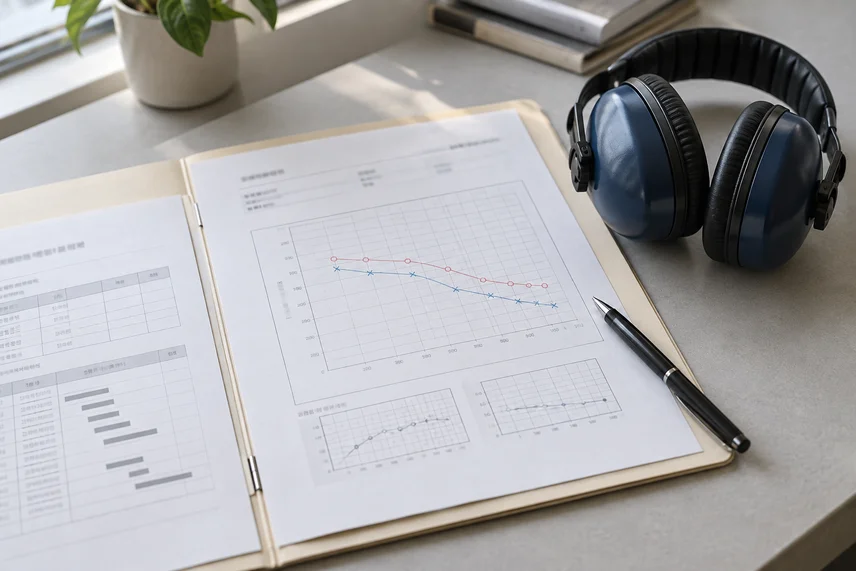
We look at the link between your past noisy work and your hearing loss, along with the degree of hearing loss and any preexisting conditions.
Eligibility criteria
What are the eligibility requirements for a hearing loss claim?
These are the main criteria for noise-induced hearing loss under the Enforcement Decree of the Industrial Accident Compensation Insurance Act.
85dB(A) or higher
A work environment with exposure to continuous noise
3 years or more
Length of employment with noise exposure
40dB or more in one ear
Sensorineural hearing loss
There must be no non-work factors that could have affected your hearing.
If you have a condition that can cause hearing loss for reasons unrelated to work, such as sudden hearing loss, otitis media, a perforated eardrum, Meniere's disease, syphilis, or cerebral infarction, your claim may not be approved.
Work history and noise exposure
Even if your employer has shut down, you can still prove your work history and noise exposure.
We need to identify the periods in your full work history when you were exposed to noise of 85dB or more, and confirm which tasks and processes exposed you to high noise levels.
We map out your full work history first, then pinpoint the jobs with noise exposure.
We document your tasks, equipment, and days worked at each workplace. If your employer has closed or you worked as a day laborer, we prove your work history with records such as employment insurance enrollment history and day labor records.
We assess your noise exposure level.
We assess your noise exposure level based on a range of evidence: site investigations · work environment measurement results · research papers on the processes and equipment · epidemiological studies · past cases where work-relatedness was recognized.
Issues by type
What we look at depends on the type of hearing loss.
We review the type of hearing loss, your hearing test results, and any preexisting conditions together. If you have past test results, we also compare how your hearing has changed.
If you're registered as a person with a disability
If you registered as a person with a hearing disability under the Act on Welfare of Persons with Disabilities, the issue date of your "disability severity assessment medical certificate" or the recognition date on your "disability certificate" becomes the diagnosis date for your hearing loss claim. That raises issues such as the statute of limitations and aggravated disability under permanent disability benefits, so you'll want a consultation.
Age-related hearing loss
Many claims are denied on the grounds of age-related hearing loss. Even so, your work may still have contributed, so it's worth a review.
Conductive and mixed hearing loss
KCOMWEL medically distinguishes hearing loss caused by other factors, such as middle ear disease or surgery, from hearing loss caused by noise. For mixed hearing loss, we need to look at both air conduction and bone conduction hearing thresholds.
Tinnitus and sudden hearing loss
Hearing loss often comes with tinnitus, but if your hearing loss doesn't meet the threshold, tinnitus alone won't qualify for workers' comp. For sudden hearing loss, if you were exposed to noise such as explosions on the job, a claim may be worth considering.
Hearing damage in one or both ears
Sometimes the numbers from your first ENT diagnosis differ significantly from the hearing loss measured at the special medical examination. In that case, the reliability of the results is assessed, and the hearing loss measured at the special examination becomes the basis for your disability grade.
Compensation
Hearing loss compensation depends on your disability grade and average wage.
Permanent disability benefits are calculated based on your recognized disability grade and your average wage under the Industrial Accident Compensation Insurance Act. Two people with the same hearing loss diagnosis can receive different amounts.
Checking your disability grade
We review the degree of hearing loss in both ears and the disability rating criteria.
Checking your average wage
We confirm that the average wage used to calculate your permanent disability benefits is correct.
Filing deadlines
If you retired long ago, start by checking your past diagnoses and claims history.
You can file for permanent disability benefits even if you retired long ago. The deadline isn't based on your retirement date. It depends on when your hearing loss was diagnosed and when it was legally considered healed.
Statute of limitations for permanent disability benefits
5
years As a rule, the right to permanent disability benefits expires if you don't file within 5 years from the day after your condition is considered healed.
What we review to determine the statute of limitations for hearing loss
- When your hearing loss was first diagnosed
- Previous hearing test results
- When your symptoms stabilized
- Whether you've filed a workers' comp claim before
Sobaek's practice areas
From filing for permanent disability benefits to appeals, Sobaek represents you.
- STEP 01
Consultation and document preparation
We consult with you and review your documents to understand your history of noisy work, your tasks and processes, and the degree of your hearing loss.
- STEP 02
Filing for permanent disability benefits and handling KCOMWEL's investigation
We prepare and submit an accident statement so that KCOMWEL's accident investigation and work-relatedness assessment follow the findings of Sobaek Labor Law Office's own investigation, and we move forward with the special medical examination.
- STEP 03

Appealing a denial of benefits or a disability grade decision
If your hearing loss claim is approved, we then review the average wage applied. If it's denied, we consider a request for review and, if needed, a request for reconsideration.
Frequently asked questions
Noise-induced hearing loss claims: frequently asked questions
Can I file for workers' comp if I'm already registered as having a hearing disability?
If you registered a hearing disability, depending on when you registered and what was recorded, the issue date of your disability severity assessment medical certificate or your disability registration date becomes the date of injury. You can still move forward even if more than 5 years, the statute of limitations for hearing loss permanent disability benefits, have passed since that date. That said, we have to weigh factors such as the reliability of the tests, whether you kept working in noisy workplaces afterward, and your final level of hearing loss.
Can I file a hearing loss claim even if I'm older?
Yes. Hearing loss caused by aging is called age-related hearing loss, and even then, if your work contributed to it, the claim can be approved.
What if my noise level or exposure period falls short of the criteria?
If your noise exposure level, continuous noise exposure, or exposure period falls short of the criteria, it's hard to get a hearing loss claim approved.
Request a consultation on a workers' comp or labor case
From filing a hearing loss claim to responding to a denial, Sobaek is here to help.
Thinking about filing a hearing loss claim, or dealing with a denial? Wonil Son, Certified Public Labor Attorney, will consult with you personally.
You can also email us directly
For corporate advisory work, new cases, or meeting requests,
email us at the address below.